Research
When “Resilience” Fractures: The 2021 Texas Power Grid Failure
The complex reality
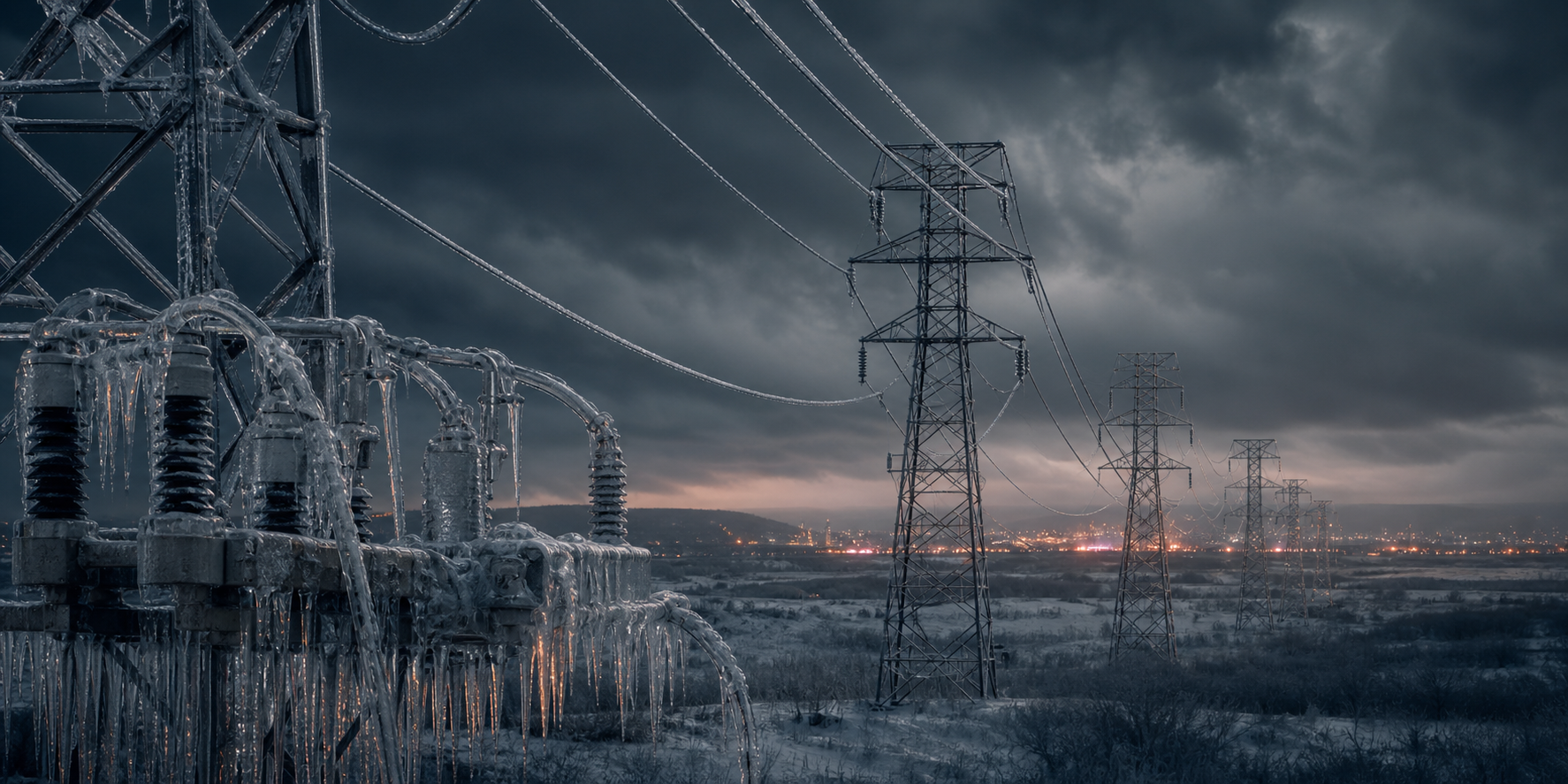
During the Winter Storm Uri failure in 2021, the Texas power grid collapsed, leaving millions without power. The fragility was not due to a single technical defect, but to the interplay of conflicting assumptions and perspectives.
- Engineers equated resilience with load balancing and optimised plants for warm-climate efficiency.
- Market designers believed that deregulation and real-time pricing would ensure resilience.
- Policymakers equated resilience with grid independence from neighbouring states.
- Citizens assumed resilience meant affordable and reliable access to power.
The failure
Each group’s definition of resilience was internally coherent within its own frame, but their interaction produced catastrophic fragility. Because these different semantics of resilience were never explicitly mapped or reconciled, optimising for one group’s definition actively undermined the others.
For example, the political requirement for “grid independence” actively prevented the grid from drawing on out-of-state power reserves exactly when the engineering choice of “warm-climate efficiency” caused the physical infrastructure to freeze. The Texas grid was considered “resilient” in an engineering sense, a market sense, and a political sense—right up until the storm hit and the grid collapsed.
This is the “Complexity Trap”: treating systems whose behaviour depends on shifting perceptions as if they were merely technical machines. What failed was not just infrastructure, but the epistemic alignment of what resilience meant across perspectives.
An Epistemic Engineering view
Traditional engineering tools miss these failures because they treat resilience as a measurable, objective property of a machine rather than a perceived quality constructed from conflicting stakeholder assumptions.
Artificial Apperception makes those perspectives explicit within a living, machine-native system model. An Assumption Graph can show which beliefs each design choice depends on, while a Synthesis Matrix can reveal where definitions of resilience reinforce or contradict one another. Evidence and decision traces keep conclusions drawn from the model and the resulting architectural choices connected to their rationale.
The aim is not to erase uncertainty. It is to make critical disagreements visible early enough for architects to test trade-offs, define anti-requirements, and validate the system before those conflicts become operational facts.